
Patients who are exploring body contouring frequently ask:
- “Can I get more definition in my abs, flanks, or arms without looking unnatural?”
- “I exercise, but I can’t get rid of stubborn fat. Can liposuction help?”
- “Is there a less invasive way to tighten my skin while removing fat?”
The good news: VASER Liposuction can help with these goals.
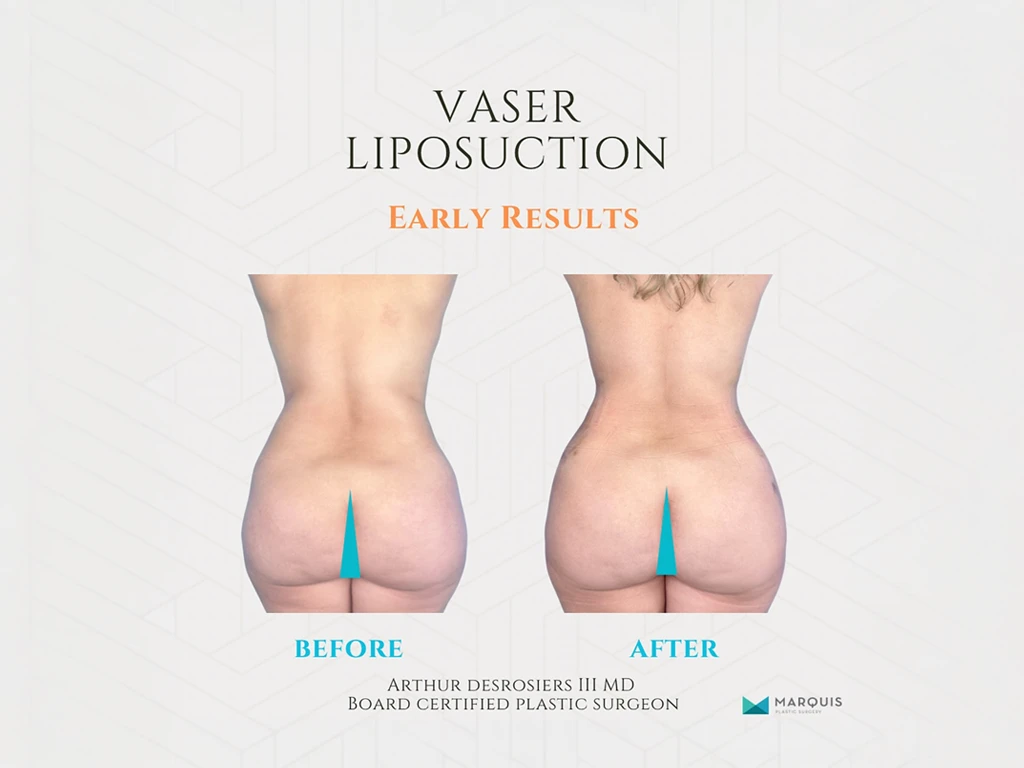
VASER Liposuction = Ultrasound Lipo
VASER stands for Vibration Amplification of Sound Energy at Resonance. It’s an advanced ultrasound-assisted liposuction technique designed to gently loosen and emulsify fat cells before they are removed with suction.1
VASER versus Other Types of Liposuction
Traditional liposuction removes fat using a purely mechanical approach. A thin tube (called a cannula) is inserted through small incisions. Near the tip of the liposuction cannula are small openings with sharp edges. As the surgeon moves the cannula back and forth, those edges physically break up and loosen fat from the surrounding tissue.
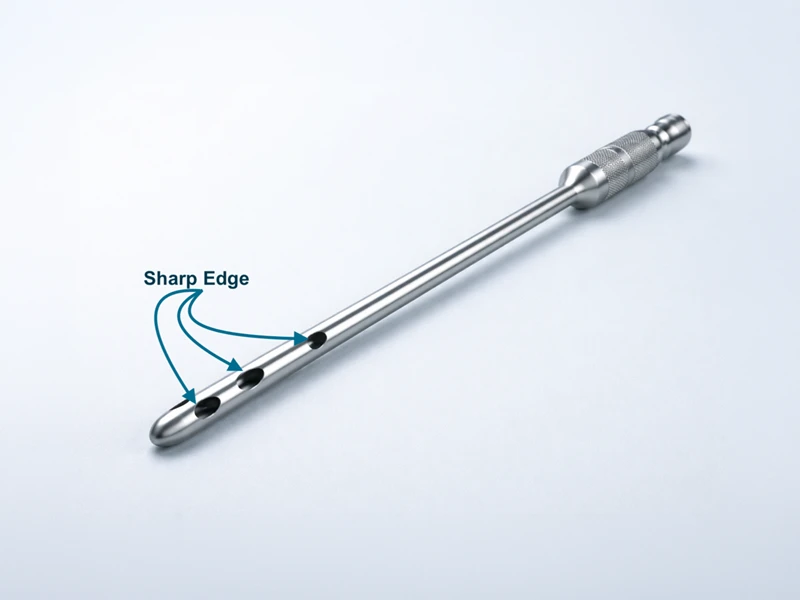
Importantly, fat is only removed if it comes into direct contact with those sharp edges. That means the surgeon must manually pass the cannula through many different areas, many different times to access and remove fat throughout the treatment zone. This method is effective. However, it is inherently point-by-point and dependent on where the cannula is manually passed. In standard lipo, the process is slow and tedious because it requires hundreds or thousands of passes of the cannula to achieve the fat-removal goal.
There is an upgraded version of standard liposuction called PAL (power-assisted liposuction), which uses a handpiece attached to the cannula. The PAL handpiece drives rapid micro back-and-forth motion of the cannula that is faster and more consistent than manual liposuction, allowing for greater precision and more effective treatment of fibrous tissue.
While, traditional and PAL liposuction are effective, each are mechanically aggressive techniques.
A simple way to think about it is that traditional and PAL liposuction are like scraping frost off a windshield with a blade. You only affect the exact spot you touch, so you must keep going over the surface again and again. In contrast, VASER is more like gently warming the glass so the frost loosens evenly across a broader area.
Once the fat is loosened, both traditional and VASER liposuction use suction to remove it. The difference is how the fat is separated from the surrounding tissue before removal: traditional and PAL rely on direct mechanical contact, while VASER uses a controlled ultrasound energy field to loosen fat more uniformly.
Areas of the Body That Can be Treated with VASER Lipo
- Abdomen
- Hips (“love handles”)
- Flanks and back
- Male and female breasts
- Arms
- Buttocks
- Thighs
- Knees
- Calves and ankles
- Chin and jowls
- Neck
This versatility can make VASER an excellent option for patients looking to enhance definition and achieve balanced, natural-looking contours across several areas of the body.
Frequently Asked Questions
Can the Fat Removed with VASER Be Transferred Somewhere Else?
Yes. The fat removed during VASER liposuction does not have to be discarded. In many cases, it can be purified and then carefully transferred to another area of the body through a process called fat grafting (or fat transfer).
One important consideration is how the fat is harvested. To preserve the viability of the fat cells for transfer, surgeons typically use lower ultrasound energy settings. In general, VASER power is kept around 60–70% when fat grafting is planned. This helps maintain the integrity of the fat cells so they are more likely to survive after transfer.
This makes it possible to use your own fat to enhance volume, shape, and contour in areas that need it. Common areas for fat transfer include the buttocks (often referred to as a Brazilian Butt Lift or BBL), the breasts for modest augmentation, the face (such as the cheeks, temples, and under-eye area), the hips to smooth hip dips, and the hands to restore lost volume.
It’s important to understand that not all transferred fat cells survive. Some degree of resorption is expected over time.
To learn more about fat grafting, be sure to visit our Blog page and look for “fat grafting.”
Can VASER Liposuction Improve the Appearance of Cellulite?
The short answer: it may help slightly.
Cellulite is not just caused by excess fat. It occurs when fibrous connective bands beneath the skin pull downward while fat pushes upward, creating a dimpled appearance. Because it involves the skin’s structure and connective tissue, removing fat alone cannot completely eliminate cellulite.
Cellulite is influenced by multiple factors, including:
- Fat distribution beneath the skin
- Tight fibrous connective tissue bands
- Skin thickness and elasticity
- Hormonal influences
- Genetics
VASER liposuction uses ultrasound energy to loosen stubborn fat, including fat in areas prone to cellulite that often doesn’t respond to diet or exercise. The energy also produces mild heat, which can stimulate skin tightening and improve contour. Studies show that patients often notice smoother, tighter skin compared with traditional liposuction methods.1
However, VASER does not release the fibrous bands that cause cellulite, so the underlying condition remains. Patients may see slight improvement in mild cellulite, but it cannot be completely removed.
What Should I Expect During a VASER Liposuction Procedure?
Anesthesia Options
The type of anesthesia depends on how much fat is being removed and which areas are treated. For many patients having liposuction on the front of the body, such as the abdomen or flanks, IV sedation is often used. With IV sedation, you are deeply relaxed and pain-free, but breathe on your own without a breathing tube.
For procedures that include the backside of the body, like the lower back or posterior flanks, general anesthesia is usually recommended. During these procedures, patients lie face-down, so securing the airway is important for safety, and general anesthesia allows the surgical team to manage this reliably.
During the Procedure
Small incisions are made in the targeted areas, and a tumescent solution is injected (both for VASER and traditional liposuction). Tumescent solution is sterile saline mixed with lidocaine and epinephrine. About 1 liter of tumescent is injected for every 1 liter of fat to be removed. This helps:
- Numb the area
- Reduce blood loss
- More easily loosen and remove fat cells
Next, the VASER wand is inserted through the same incisions. Ultrasound energy gently loosens stubborn fat, which is then removed with suction along with much of the tumescent fluid. Some fluid is left in the body to help numb post-procedure pain and will be absorbed or expressed through the cannula sites over the following days.
This approach allows your surgeon to sculpt and contour the body with precision while minimizing trauma to surrounding tissues.
Comfort and Safety
Throughout the procedure, your anesthesia team monitors your vital signs closely to ensure safety and comfort. Most patients feel mild pain with moderate pressure following VASER liposuction.
Are There Any Risks or Side Effects?
Your surgeon will review your personal risk factors during your consultation and discuss how to minimize complications while achieving the best results.
How Long is Recovery After VASER Liposuction?
Recovery after VASER liposuction depends on how much fat is removed and which areas are treated. For patients who also undergo fat transfer, the liposuction component is often limited, but recovery still varies by individual.
Typical recovery patterns:
- Small-volume liposuction (a few hundred milliliters): Many patients feel well enough to return to desk work or light activities within 1 day.
- Larger-volume procedures (one to several liters): Most patients take several days to up to a week off work, depending on swelling and soreness.
Other recovery notes:
- Bruising and tenderness are usually most noticeable during the first week and gradually improve over the following weeks.
- Compression garments are typically worn on the treated areas to support healing.
- Lipo massage or lymphatic drainage is often recommended during the first two weeks to help reduce swelling and promote smooth contours.
- Light activity and walking can usually begin immediately, while more strenuous exercise is generally resumed 1–2 weeks after larger-volume procedures, once swelling and discomfort have improved.
Following your surgeon’s instructions carefully can help speed healing and achieve the best results.
How Long Do Results Last?
The fat cells removed during VASER liposuction are permanent, but your long-term results depend on your lifestyle and natural aging. Weight fluctuations, gravity, and the normal aging process may all affect how your body looks over time.
Tips for Maintaining Long-Lasting Results:
- Follow post-operative instructions: Carefully following your surgeon’s guidance helps support healing, reduce complications, and optimize results.
- Stay active, eat healthy, and optimize hormones: This helps prevent weight gain and keep your contours smooth.
- Prioritize quality sleep: Good sleep supports healing, maintains metabolism, regulates appetite, and balances stress hormones that influence weight.
Evidence-Based Sleep Tips:4,2
- Keep a consistent sleep schedule and limit long or late daytime naps
- Make your bedroom dark, quiet, and cool.
Avoid screens before bed - Limit stimulants like caffeine and alcohol in the evening
- Exercise regularly — but not right before bed
By combining a healthy lifestyle with these habits, you can maximize and maintain your VASER results.
Who is the best candidate for VASER Liposuction?
VASER liposuction is designed for body contouring, not weight loss. Ideal candidates are already at or near a healthy, stable weight and are looking to refine their shape. While the fat cells removed during the procedure are permanent, significant weight gain afterward can lead to fat accumulation in other areas, which may affect your overall results.
Medication and weight stability also matter. If you are currently using GLP-1 medications (such as semaglutide or tirzepatide) for active weight loss, or are planning to start them, liposuction is generally not recommended at that time. These medications can cause ongoing weight changes, making it difficult to achieve stable, predictable results.
If you are on a maintenance dose or microdosing a GLP-1, this is often acceptable, but it should be discussed with your surgeon. In most cases, GLP-1 medications are held for approximately two weeks before surgery for anesthesia safety.
For the best long-term outcome, VASER works most effectively when used strategically for contouring – removing small, targeted areas of fat to reveal underlying muscle tone and enhance natural curves. This is why it’s important to choose a skilled, board-certified plastic surgeon who understands how to sculpt the body, rather than simply remove large amounts of fat.
A personalized consultation with a board-certified plastic surgeon is the best way to determine if VASER liposuction is right for you and to discuss your specific goals.
Ready to Explore Your Options?
If you are considering body contouring and want to understand what approach makes the most sense for your body, goals, and lifestyle, a personalized consultation is the best next step.
To schedule a consultation or learn more about VASER Liposuction, schedule a consultation, call 305-403-2922, or email us at concierge@ArthurMD.com.
[1] Pinto, E. B. de S., Abdala, P. C. S., Maciel, C. M., dos Santos, F. P., & de Souza, R. P. (2006). Liposuction and VASER. Clinics in Plastic Surgery, 33(1), 107–115. https://pubmed.ncbi.nlm.nih.gov/16427979/
[2] Ali, H. (2025). Correction of gynecomastia with combination of ultrasonic liposuction (VASER) and gland excision through a minimal scar incision: A multi-center experience. Aesthetic Plastic Surgery. https://doi.org/10.1007/s00266-025-04801-3
[3] Tran, B. N. N., Didzbalis, C. J., Chen, T., Shulzhenko, N. O., & Asaadi, M. (2022). Safety and efficacy of third‑generation ultrasound‑assisted liposuction: A series of 261 cases. Aesthetic Plastic Surgery, 46(5), 2310–2318. https://doi.org/10.1007/s00266‑022‑02992‑7
[4] Irish, L. A., Kline, C. E., Gunn, H. E., Buysse, D. J., & Hall, M. H. (2015). The role of sleep hygiene in promoting public health: A review of empirical evidence. Sleep Medicine Reviews, 22, 23–36. https://pubmed.ncbi.nlm.nih.gov/25454674/
[5] Rohrich, R. J., Broughton, G. II, Horton, B., Lipschitz, A., Kenkel, J. M., & Brown, S. A. (2004). The key to long‑term success in liposuction: A guide for plastic surgeons and patients. Plastic and Reconstructive Surgery, 114(7), 1945–1952. https://doi.org/10.1097/01.PRS.0000143002.01231.3D
Note: Natalie Colon, PA-S contributed to the writing of this blog. She is currently a PA student with an expected graduation date of 2026.

Contact Us To Schedule Your Consultation
Our Latest Posts