
Curious about which lip shape suits you best? Here’s what to know before your lip filler appointment.
Lip filler isn’t just about adding volume. It’s about enhancing your natural shape, balancing proportions, and achieving results that complement your face. During your consultation, Dr. Desrosiers emphasizes collaboration, safety, and your aesthetic goals—combining them with his expertise to help deliver results that are safe, natural, and tailored to you.
Common Lip Shapes and How Filler Can Enhance Them
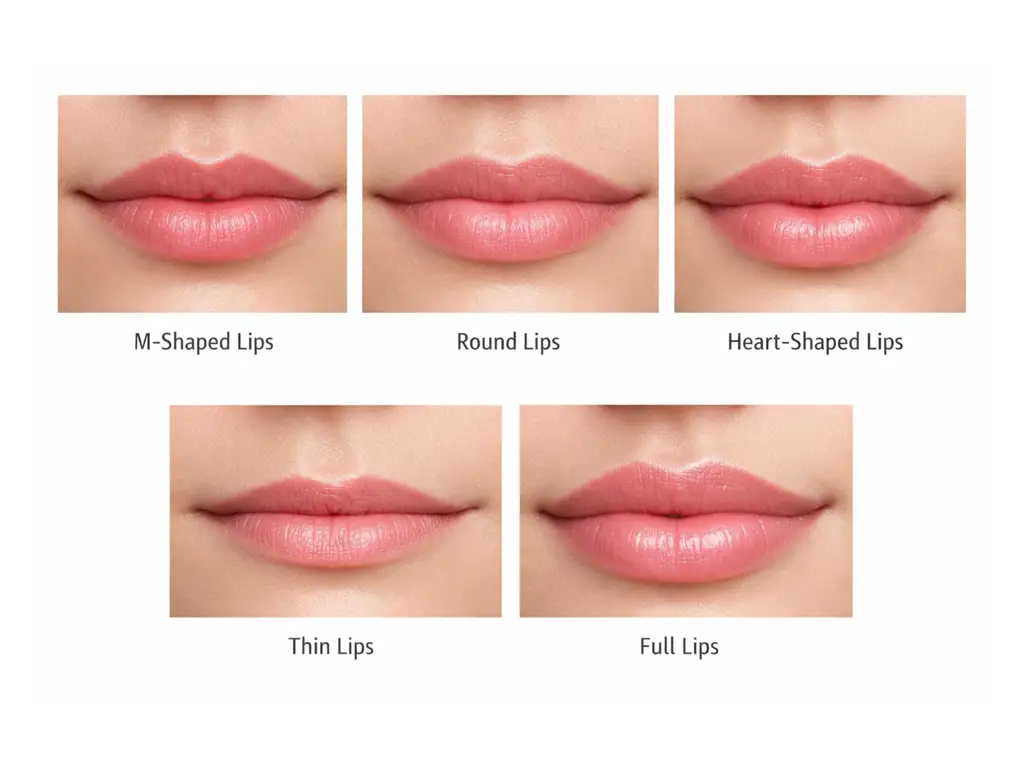
Everyone’s lips are unique, but some common shapes include:
- M-shaped lips: Defined peaks at the Cupid’s bow. These lips can sometimes have small gaps when your mouth is resting, or the upper lip may disappear when you smile. Dr. Desrosiers can enhance vertical height or peaks and restore upper-lip visibility for a balanced, natural look.
- Round lips: Evenly curved; filler typically adds subtle volume.
- Heart-shaped lips: Pronounced Cupid’s bow with a fuller lower lip; filler can balance proportions between upper and lower lips.
- Thin lips: Minimal natural volume; the goal is gentle fullness and crisp definition.
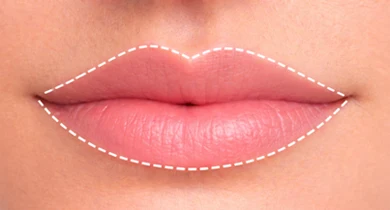
- Full lips: Naturally plump; filler may focus on shaping, adjusting projection, or rarely highlighting the vermillion border—the line where the pink of your lips stops and your skin begins, where you put lip liner on. Defining this edge with filler creates a natural, well-shaped outline.
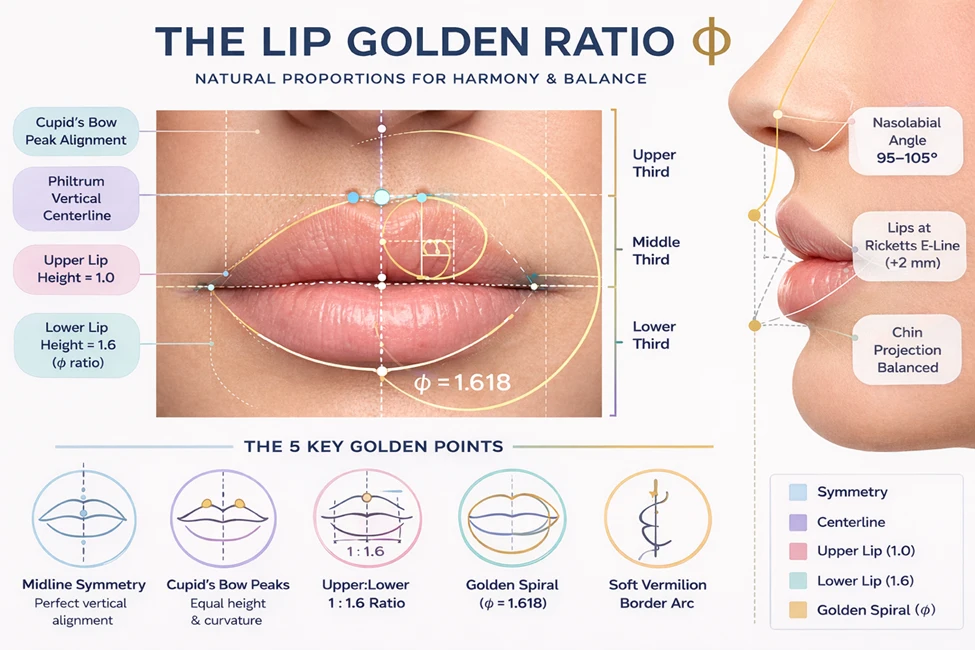
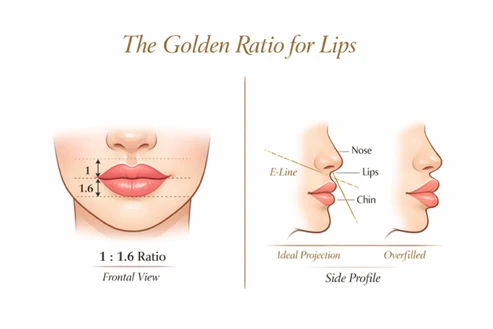
Dr. Desrosiers considers proportions, symmetry, and the golden ratio, often aiming for a 1 to 1.6 balance between the upper and lower lip for natural looking results.
FAQs About Lip Treatment
How will my lips be discussed during the consultation?
Your injector will describe your lips in patient-friendly terms so you can visualize the outcome. Key terminology often includes:
Vertical height: The distance from the base of the upper lip to the peak of the Cupid’s bow. This is basically how “tall” the upper lip looks.
Cupid’s bow definition: Creating gentle peaks for a natural, balanced look.
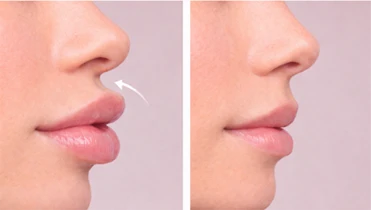
Anterior projection: How far your lips sit forward from your face; subtle adjustments prevent a “shelf-like” appearance.
Vermillion border shaping (rarely indicated): Defining the lip’s edge for a crisp outline.
Symmetry and balance: Ensuring the top and bottom lips complement each other and your facial features.
This conversation helps you feel part of the decision-making process, rather than just receiving an injection.[


Can my lips look natural without looking overdone?
Yes.
The goal is not to change how you look, but to refine what is already there in a way that feels balanced, soft, and natural. Dr. Desrosiers takes a conservative, anatomy-driven approach, focusing on subtle enhancement that preserves normal movement and expression rather than creating stiffness or excess volume.
During treatment, careful attention is given to vertical height and symmetry so the lips appear more youthful and proportionate without drawing attention to the fact that anything was done. The lower lip can be gently shaped, whether that means a soft, natural curve or a more defined contour like a keyhole effect, always tailored to your individual goals and facial structure.
When done well, the result is not “filled” lips. It is a refreshed version of your own lips that blends seamlessly with your features and simply looks like you on a really good day.
Does lip filler hurt?
Most patients report minimal discomfort. Dr. Desrosiers uses a thoughtful, stepwise approach to keep the experience as comfortable as possible from start to finish.
Ice is applied to the lips beforehand to reduce sensation and help minimize bruising. A topical numbing agent is then placed inside the mouth along the gum line, which provides effective anesthesia without adding unnecessary swelling or bruising to the outer lips.
For cannula-based treatments, a dental block is generally also used, similar to what you would receive at the dentist, to further enhance comfort.
During the procedure, additional techniques like distraction vibration anesthesia are used to reduce any remaining sensation.
Once properly numbed, most patients feel little to no pain and are often surprised by how easy the process is.
How much filler will I need?
Dr. Desrosiers takes a conservative and collaborative approach to ensure natural results:
- He typically starts with small placements and hands you a mirror so you can help guide the process, saying “that looks perfect” or “a little more” as it’s done.
- You are not limited to any pre-specified amount of filler. Adjustments are made based on individual anatomy and desired outcome.
- Many patients love their results with subtle enhancements, sometimes starting with around 0.5cc, depending on their natural lip shape and desired outcome.
- For reference, 1.0cc is roughly the size of a small blueberry. When distributed across both the top and bottom lips, it can create tasteful, natural fullness without looking overfilled.
This method combines your input with Dr. Desrosiers’ expertise to help ensure you leave happy with your results.
Will my filler migrate?
Proper placement and dosing matters. Dr. Desrosiers uses precise injection planes to keep filler in place while maintaining smooth curves and natural movement. A gradual approach (smaller injection volumes) also reduces the risk of migration. Instead of injecting several ccs into the lips all at once, volume is added conservatively over time. This helps maintain a well-defined shape and supports more natural-looking results. In contrast, too much filler too fast can cause the filler to spread because the tissue won’t have adequate time to accommodate.
Which type of lip filler is best for me?
There isn’t a single “best” filler. The right choice depends on your anatomy, your goals, and how you want your lips to look both at rest and in motion. Dr. Desrosiers selects the product and technique based on what your lips actually need, not a one-size-fits-all approach.
Some fillers are better suited for structure. These provide support, helping to build vertical height, refine shape, and enhance definition. They are often used to restore or subtly accentuate areas like the Cupid’s bow or to rebuild lip architecture that has softened over time.
Others are designed for hydration and smoothing. These softer fillers integrate easily into the tissue, adding a light, natural fullness while improving texture and softening fine lines. The result is a refreshed look rather than a noticeably “filled” one.
When the goal is more volume, a different type of filler may be used to increase fullness and projection while still keeping proportions balanced between the upper and lower lips. The key is doing this in a way that avoids heaviness or an overdone appearance.
Most patients benefit from a customized combination rather than a single approach. The goal is always the same: lips that look balanced, natural, and aligned with your features.
Which lip filler brands are commonly used and how are they different?
There are several FDA‑approved hyaluronic acid (HA) fillers used for lips. Each has unique properties, and the “best” one depends on your goals and anatomy rather than simply lasting the longest.
Longevity of all fillers varies depending on metabolism, muscle movement, and injection site. In our clinical experience, fillers are often not completely metabolized after one year and may persist longer.
Juvederm® (Allergan Aesthetics)
- Volbella® XC: Designed to add subtle volume to the lips and smooth lines around the mouth. Provides a soft, smooth gel with results lasting up to about 1 year.1
- Vollure® XC: Slightly thicker/stiffer gel for more noticeable lip fullness.
Restylane® (Galderma)
- Kysse: Specifically formulated for lip augmentation and correction of lip lines. Designed to move naturally with facial expression so lips look smooth and soft when you talk, smile, or kiss. Results last up to about 1 year.2,3
RHA® (Resilient Hyaluronic Acid — Teoxane, distributed by Revance)
- RHA 3: FDA‑approved for lip augmentation, designed to deliver natural volume and contour while adapting to facial movement. Results last up to ~1 year.4
- RHA 4: Part of the same resilient HA collection but formulated for deeper support and volume. Less commonly used for lips; may be selected based on individual goals or anatomy.
RHA fillers are known for being flexible and resilient, meaning they are designed to adapt fluidly with facial expressions (like smiling and talking) while still providing shape and contour.
Key point: All of these are hyaluronic acid fillers, so they are reversible with an enzyme injection called Hylenex, giving flexibility and peace of mind. Your injector selects the product that best matches your anatomy, goals, and desired longevity.
Why wouldn’t I just choose the longest‑lasting filler?
It might seem like “longer lasting = better,” but that isn’t always true for lips:
Natural movement and feel: Lips are one of the most dynamic areas of the face — they need to be soft and flexible. Some fillers (like RHA 3 and Restylane Kysse) are specifically designed to adapt to movement, so your lips feel natural even when you talk or smile.
Aesthetic flexibility: Longevity isn’t permanent, and preferences change. Shorter‑lasting fillers give you the opportunity to adjust shape or volume over time as your goals evolve.
Customized enhancement: Some fillers are better suited for fine contouring and definition, while others provide more pronounced volume. Working with your injector helps you choose the right balance for your anatomy and aesthetic goals.
Needle or cannula: which is better for me?
- Needle injections: Used for precise definition of the Cupid’s bow, corners, or vermillion border
- Cannula (Swedish lips): A blunt, flexible tool that reduces bruising and swelling, often placed submucosal or behind the muscle for smooth, natural curves
Combining these techniques allows Dr. Desrosiers to enhance vertical height, fill gaps in M-shaped lips, and shape the bottom lip while preserving natural movement.
Recovery After Lip Filler Injections
Lip filler injections typically are very well tolerated and have minimal complications. Mild swelling or tenderness is normal for a few days. You should avoid touching, massaging, or exercising for 24–48 hours. If you do have bumps, contact your doctor to determine if it is a bruise or a filler bump that needs to be massaged. Ice can help reduce discomfort, but remember not to place it directly on the skin. Particularly take care in the first few hours post-injection: most fillers have lidocaine and your lips may be numb – i.e., you may not feel that the ice is dangerously cold. Lipstick / makeup can usually be applied after 24 hours, but classic Vaseline is safe to apply immediately post-injection. While lip filler is noticeable immediately, it will take about 2 weeks until your results are fully settled.
How do I know which filler is best for me?
The right filler depends on how you want your lips to look and feel, not just the brand. Each product has different physical properties, and Dr. Desrosiers selects the approach based on your anatomy, your goals, and how much structure, softness, or movement your lips need.
If your goal is soft, natural movement, many patients prefer fillers like Restylane Kysse or RHA 3. These are designed to integrate smoothly into the tissue and move naturally with expression, so your lips feel flexible and look like your own, just more refined.
If your goal is subtle refinement without much added volume, a softer filler like Juvederm Volbella may be appropriate. Volbella is typically used for hydration, smoothing fine lines, and very gentle shaping rather than building structure or projection.
If you are looking for more noticeable fullness or structure, a more supportive approach is needed. In some cases, a product with more lift and hold, such as Vollure, may be used selectively to help define shape or support the lip. Because it is firmer, it must be used thoughtfully in the lips to maintain a natural look and avoid heaviness.
When anatomy or goals are more nuanced, your consultation becomes the most important step. Reviewing examples and discussing elements like vertical height, Cupid’s bow definition, projection, and symmetry allows the treatment plan to be tailored to you, not driven by a single product.
In the end, the best filler is the one that matches your goals while keeping the result balanced, natural, and consistent with your features.
Ready to Explore Your Ideal Lip Shape?
A personalized consultation with Dr. Desrosiers is designed to help you understand your options and create a plan that feels right for you. During your visit, you will explore lip shapes that complement your facial features and discuss how different techniques, including needle versus cannula and injection depth, influence both safety and results.
You will also learn how factors like volume, vertical height, and overall lip shaping work together to create balance. Common concerns, such as gaps in M-shaped lips, filler migration, or loss of upper-lip visibility when smiling or laughing, can be thoughtfully addressed with a tailored approach.
Most importantly, the consultation allows you to determine which type of filler aligns with your goals, your anatomy, and how long you want your results to last, so the outcome feels natural, intentional, and uniquely yours.
Contact our office today, schedule a consultation or call 305-403-2922, or email us at concierge@ArthurMD.com.
[1] Allergan Aesthetics. JUVÉDERM® for lips. Available at: https://www.juvederm.com/treatment-areas/lip-filler. Accessed March 31, 2026.
[2] Galderma. Galderma receives FDA approval for Restylane® Kysse, a new hyaluronic acid (HA) filler specifically designed and indicated to add fullness to the lips and help smooth the wrinkles above the mouth. Published May 6, 2020. Available at: https://www.galderma.com/news/galderma-receives-fda-approval-restylaner-kysse-new-hyaluronic-acid-ha-filler-specifically. Accessed March 31, 2026.
[3] RestylaneUSA.com. Get full natural-looking lips with Restylane® Kysse. Available at: https://www.restylaneusa.com/product/restylane-kysse. Accessed March 31, 2026.
[4] U.S. Food and Drug Administration. RHA 3 dermal filler – P170002/S030. Published Dec 22, 2023. Available at: https://www.fda.gov/medical-devices/recently-approved-devices/rha-3-dermal-filler-p170002s030. Accessed March 31, 2026.
Note: Natalie Colon, PA-S contributed to the writing of this blog. She is currently a PA student with an expected graduation date of 2026.

Contact Us To Schedule Your Consultation
Our Latest Posts