
The first step to fixing saggy eyelids is determining the anatomy that is contributing to this appearance. Common reasons that upper eyelids can appear droopy are: 1) improper eyebrow position; 2) reduced bony prominence of the supraorbital rim; or 3) extra skin on the upper eyelids (most common). Less frequently, a saggy upper eyelid appearance may be caused by problems with the muscle or nerves around the eyelids; this is called ptosis. Ptosis can sometimes be associated with trauma or certain medical conditions such as myasthenia gravis.
To understand the anatomical cause, as discussed below, there are some common exams performed.

Eyebrow position is important because an eyebrow that is too low places downward pressure on the eyelid. This downward pressure makes the eye appear less open – i.e., “droopy” or “tired.”
One way to check eyebrow position is to identify where the eyebrow rests relative to the supraorbital rim. The supraorbital rim is the bony prominence above the eye that marks the start of the forehead.
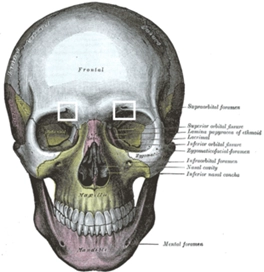
For a feminine aesthetic, the eyebrow’s inner aspect should rest at the supraorbital rim and gradually rise so the eyebrow’s tail rests slightly above the supraorbital rim. For a masculine aesthetic, the eyebrow should rest on the supraorbital rim. Masculine eyebrows are more flat and feminine eyebrows have a slight arch.
If the eyebrow sits below the appropriate position for the desired aesthetic, then a brow lift may be indicated to help correct the appearance of saggy or droopy eyes.
As noted, the supraorbital rim is the bony prominence that runs above the eye. However, the supraorbital rim should not be equally prominent if a patient is trying to achieve a feminine aesthetic. Instead, the supraorbital rim should peak at the eye’s outside corner. Sometimes, due to age or genetics, the supraorbital rim is flatter than ideal, creating a “tired” appearance. When this is the case, a small amount of filler can be placed on the bone to bring the peak to its ideal height. This subtle correction can significantly brighten the face and reduce the appearance of “being tired.
Extra skin on the upper eyelid can develop with age or occur early in life because of genetics. Extra skin on the eyelids is the most common cause of “droopy eyes.
To check for extra skin, a forceps (a medical grade “tweezer”) is used to gently pinch the upper eyelid skin. If the patient can fully open and close their eyes with the skin still gently pinched with the forceps, then this indicates the presence of extra skin. Extra upper eyelid skin can be removed through a procedure called an upper blepharoplasty.
There are normal pockets of fat in the upper eyelid area. These are called upper eyelid fat pads. Sometimes, upper eyelid fat pads can bulge with age; other times, it is hereditary and can be seen in younger patients. The prominence of these fat pad can be evaluated by gently pressing on the globe with the eye closed. If the fat pad protrudes when the pressed, this may indicate that the fat pad may need to be removed or trimmed. Rarely, if ever, is fat pad prominence the sole the cause of saggy eyes. Fat pad prominence is not terribly common. When there is fat pad prominence, it is typically extra skin and fat pad prominence that causes the appearance of droopy eyes.
Generally, when the eye is opened and looking straight ahead, the upper eyelid should cover about one-sixth of the iris. The iris is the colored part of the eye. When the upper eyelid covers more than about one-sixth of the iris, this is called ptosis. Ptosis indicates that there may be a problem with the muscles or nerves around the eye. Sometimes, ptosis is associated with trauma or a medical condition such as myasthenia gravis. Most often, upper eyelid ptosis develops gradually. However, sudden onset of ptosis should be promptly evaluated by a physician as soon as it’s noticed.
Ptosis can be corrected with an upper blepharoplasty that addresses the muscle (and often extra skin too). However, persons experiencing ptosis should be worked up to identify whether there is any underlying medical condition. In some cases, treating an underlying medical condition may treat the ptosis and mitigate the need for surgical intervention.

Contact Us To Schedule Your Consultation